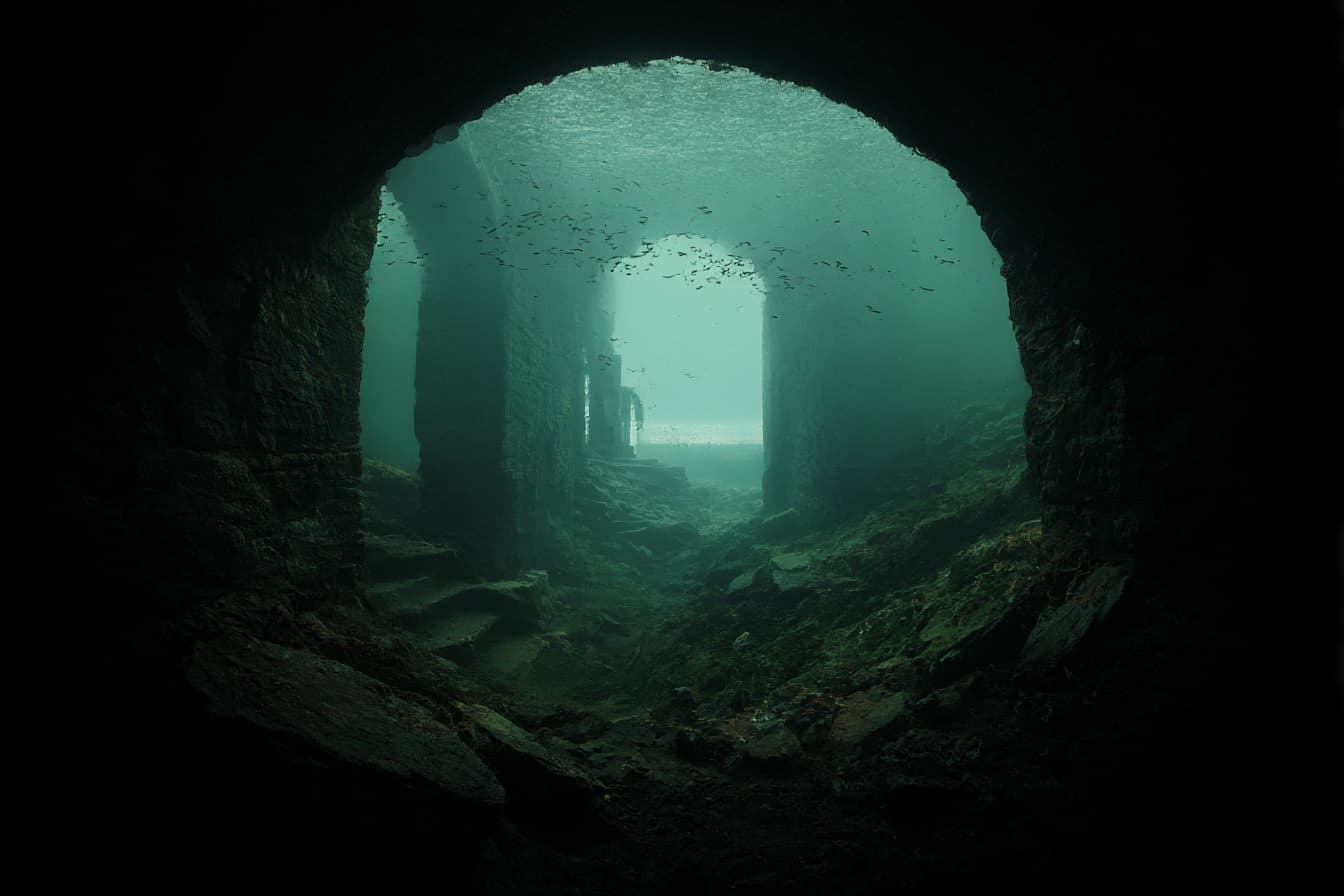
SCPG-007: The Abyssal Choir
Object Class: Euclid
Special Containment Procedures: SCPG-007 is contained within a custom-built marine habitat at Site-64's Aquatic Research Division. The containment tank measures 50m × 30m × 15m and is filled with pressurized saltwater maintained at 4°C to simulate deep-ocean conditions. The tank is equipped with specialized acoustic dampening materials and sound-proof barriers rated for frequencies up to 200 kHz.
All personnel interacting with SCPG-007 must wear specialized hearing protection and are limited to 30-minute exposure periods. Under no circumstances should more than three (3) specimens of SCPG-007 be housed together, as this triggers the anomalous "chorus effect" detailed in Addendum 005-B.
Description: SCPG-007 consists of a colony of deep-sea cephalopods resembling a hybrid between Vampyroteutis infernalis and an unidentified species of octopus. Individual specimens measure between 0.8m to 1.2m in length, with eight primary tentacles and two additional feeding appendages. The most notable feature of SCPG-007 is a series of specialized vocal organs located along their mantle, which appear to be evolutionary adaptations not present in any known cephalopod species.
SCPG-007 specimens communicate through complex harmonic frequencies ranging from infrasound (below 20 Hz) to ultrasound (above 20 kHz). When isolated, individual specimens produce melodic patterns that researchers have described as "hauntingly beautiful" and "reminiscent of whale song, but more intricate."
The anomalous properties of SCPG-007 manifest when three or more specimens are in proximity (within 100 meters of each other). In these conditions, the specimens will begin producing synchronized harmonic frequencies that create a phenomenon designated SCPG-007-A, colloquially referred to as "The Abyssal Choir."
SCPG-007-A Effects:
- Humans exposed to SCPG-007-A report profound emotional responses, including euphoria, religious experiences, and vivid hallucinations of underwater environments
- Extended exposure (>15 minutes) causes subjects to develop an overwhelming compulsion to enter bodies of water
- Subjects affected by SCPG-007-A demonstrate temporary ability to hold their breath for periods up to 45 minutes
- Long-term exposure results in physiological changes, including the development of nictitating membranes and increased lung capacity
Addendum 005-A: Discovery SCPG-007 was discovered following reports of "singing" emanating from the Mariana Trench during a deep-sea research expedition in ████. The research vessel Cousteau's Dream reported that their sonar equipment detected complex acoustic patterns at depths exceeding 8,000 meters. When the crew attempted to investigate, three members of the expedition dove overboard during the night, claiming they "heard the ocean calling."
Two of the three crew members were recovered alive but required extensive psychological treatment. The third, Dr. Marina Kowalski, was found 72 hours later floating near the research site. Despite being in the water for three days, she showed no signs of hypothermia or dehydration. When questioned, Dr. Kowalski claimed she had been "singing with the deep ones" and had no memory of the intervening time.
Addendum 005-B: Incident 005-Alpha On ██/██/████, a containment breach occurred when a fourth SCPG-007 specimen was accidentally introduced to the main tank during routine maintenance. The resulting SCPG-007-A event was more powerful than any previously recorded, with effects detectable throughout Site-64.
Forty-seven personnel were affected, with thirty-two requiring immediate medical attention. Security footage shows affected individuals attempting to reach the facility's emergency water supplies, with several personnel found in shower stalls and one researcher discovered in the site's water treatment facility.
Dr. Elisabeth Chen, who was monitoring the containment chamber during the incident, provided the following statement before requesting transfer to another project:
"The sound wasn't just heard—it was felt, like the ocean itself was calling out through the walls. For a moment, I could see vast underwater cities, populated by beings that moved like living music. I understood then that we're not containing these creatures—we're silencing something that was meant to be heard across the world's oceans."
Following this incident, containment protocols were updated to prevent multiple specimens from being housed together, and additional acoustic shielding was installed throughout Site-64.
Addendum 005-C: Long-term Observation Notes Dr. Hayes, Site-64's Marine Biology Specialist, has noted several concerning developments during extended observation of SCPG-007:
- Individual specimens appear to be growing more complex vocal organs over time
- Specimens demonstrate problem-solving abilities far exceeding normal cephalopod intelligence
- Recent acoustic analysis suggests SCPG-007 communications may contain mathematical sequences, specifically prime numbers and Fibonacci patterns
- Specimens show signs of distress when separated, often producing mournful vocalizations that affect staff morale
Research Note: Analysis of SCPG-007's DNA has revealed genetic markers that do not correspond to any known terrestrial species. Dr. Chen's theory that SCPG-007 represents an evolutionary branch that developed in complete isolation from surface life forms is currently under investigation. The implications of their apparent attempts to "call" to something in the deep ocean remain a subject of ongoing research and concern.
Classification Review: Due to the increasingly complex nature of SCPG-007's communications and their apparent ability to affect human psychology on a fundamental level, reclassification to Keter class is under consideration by the Site-64 Review Board.